



Match money to records
Business and up

Start with what you are owed, and what you owe

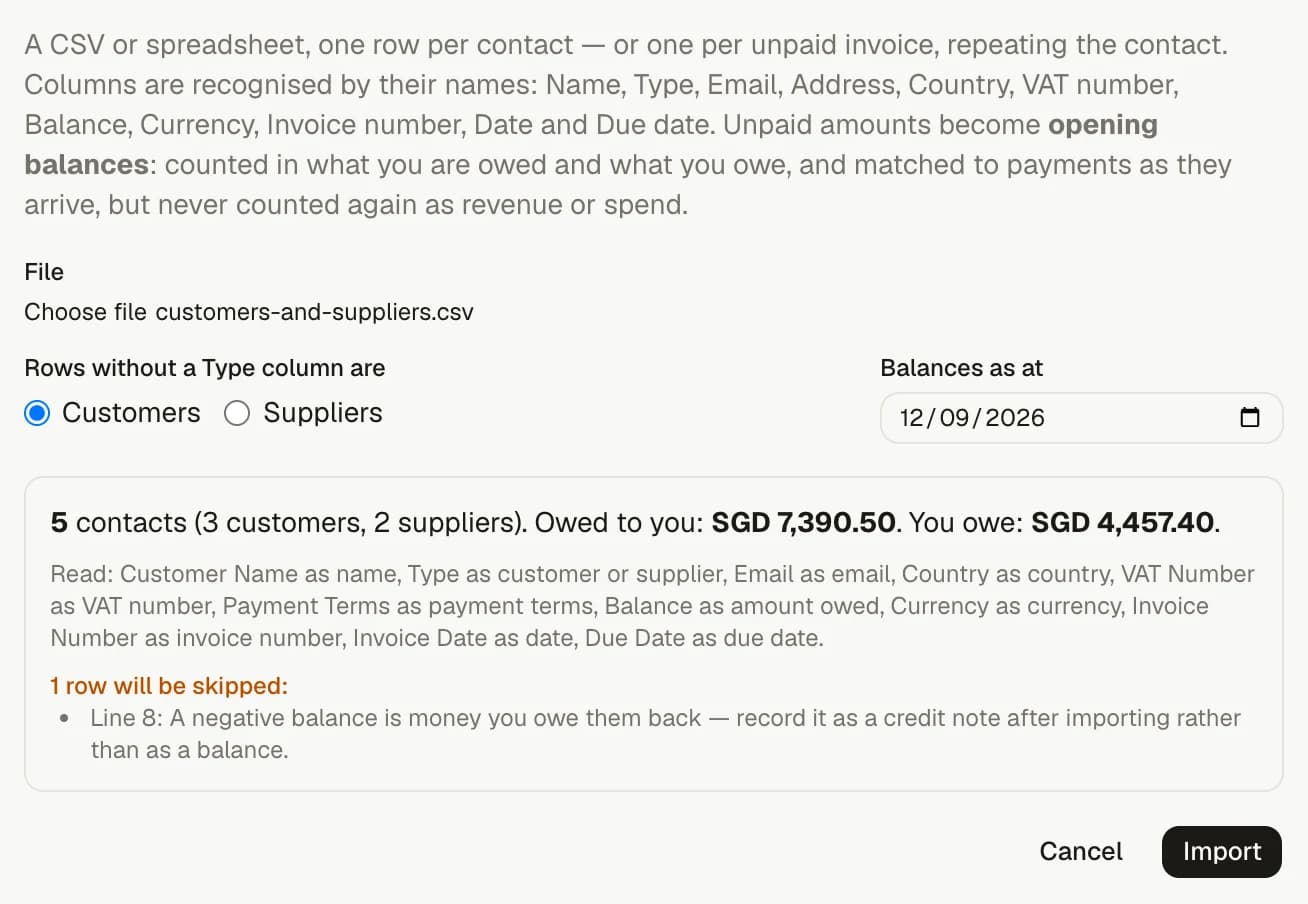
Import your customers and suppliers from a spreadsheet or your old system, with every unpaid invoice and bill. Columns are recognised by their names, and a contact you already have is matched rather than doubled. Each unpaid amount becomes an opening balance: it counts in what you are owed and what you owe from the first day, ages from its own due date and settles when the payment arrives, but it is never counted again as revenue or spend, and invoiso does not send or remind anybody about it.

The invoiso contact import, previewing a customer list with what each still owes.
See what an import will create, and what is owed each way, before anything is written.

From bank line to settled balance

Match the movement. Keep the evidence.

A receipt or payment makes sense only beside the invoice, bill or credit note it settles. Keeping both sides attached makes every balance and ageing figure explainable.

Availability

Business and up

Part of

Match money to records

Try asking

  • Import this customer list with what each of them still owes
  • How much was owed to us when we started using invoiso?

Frequently asked questions

How does this feature work?

Import your customers and suppliers from a spreadsheet or your old system, with every unpaid invoice and bill. Columns are recognised by their names, and a contact you already have is matched rather than doubled. Each unpaid amount becomes an opening balance: it counts in what you are owed and what you owe from the first day, ages from its own due date and settles when the payment arrives, but it is never counted again as revenue or spend, and invoiso does not send or remind anybody about it.

Which plan includes this feature?

Business and up. The pricing page shows the current plan boundary and any usage allowances.

Can I use the invoiso assistant with this workflow?

Yes. The in-app assistant can work with the records available to your plan, and it asks before it sends, deletes or sets up anything recurring. For example: “Import this customer list with what each of them still owes”.